
Developing a unified approach to solving business problems at a global scale using design thinking, service design, data science and lean innovation
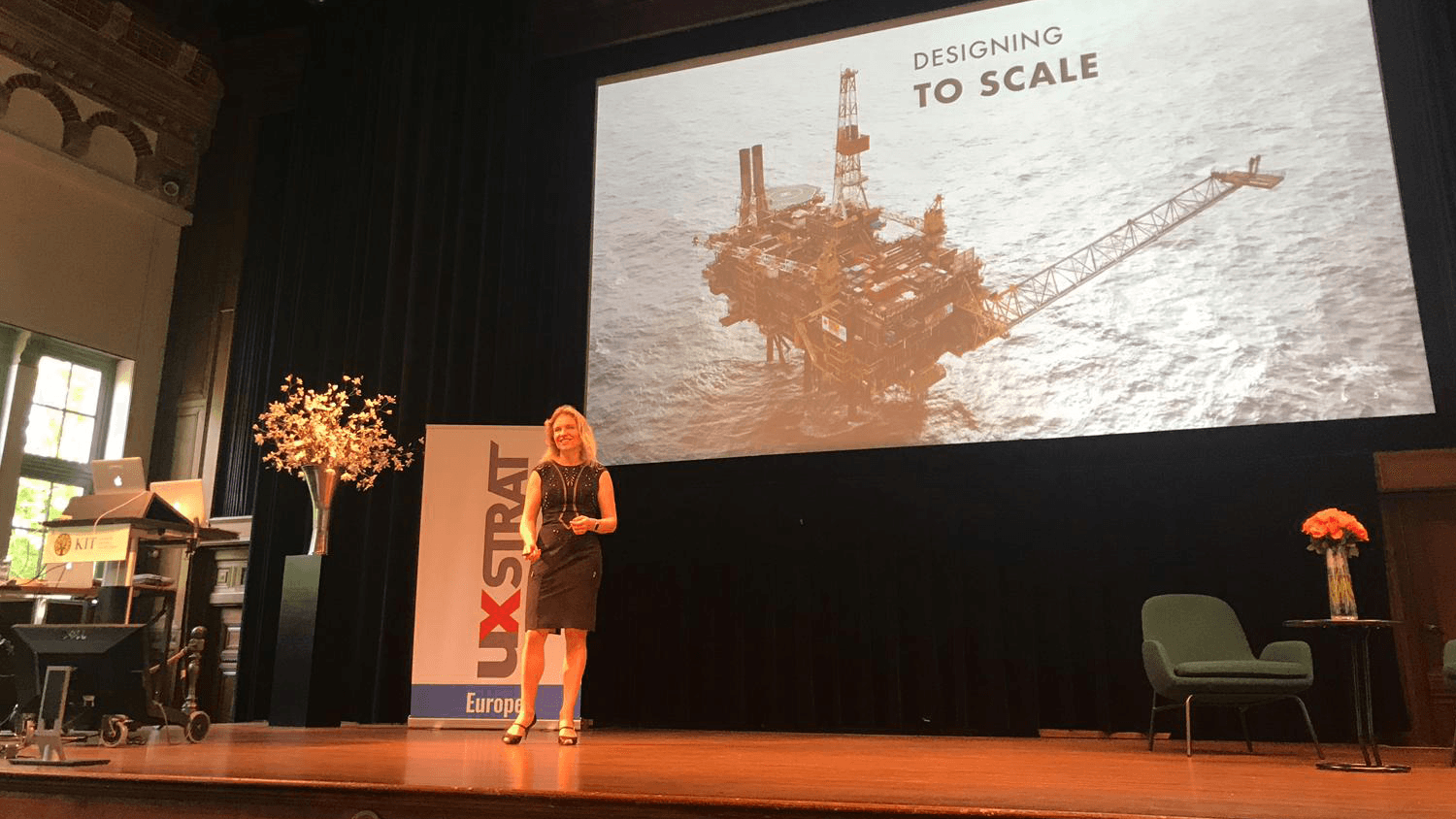
I did a presentation about this work at UXStrat conference in Amsterdam on 19 June 2019. Please feel free to watch it or read about it below.
Challenge
As businesses accumulate vast amounts of data, there is a strong desire to establish best practices to use it for creating compelling products and services, and data-driven culture. What does it actually mean in practice? What kind of skills do we need to tackle this challenge? What is the best approach to doing it?
Shell has initiated a transformation programme to become more data-driven and customer-centric. This included distilling best practices of internal teams and external partners to develop a unified approach to product delivery.
We aimed to combine best practices of agile product development with service design, data science, business modelling and change management approaches. Each discipline has its own ways of delivering business value, but with limitations. Working as multi-disciplinary teams in a complementary way helps to overcome many of them.
Our goal was to develop a unified methodology for delivering digital products and services at Shell and champion it within the organisation.
Client: Shell
Role: Strategic Design Lead, Product Owner,
Content Curator
February 2019 —
September 2019
London
Challenges of designing the Product Delivery Methodology
It needs to be flexible enough to be useful for a vast variety of products and services without becoming too generic.
Finding the right balance between prescriptive and recommended approach to maximise adoption of the methodology by product teams.
Consistent interpretation of the methodology at a global scale.
Changing mindset from delivering projects (on time, budget to a set of requirements) to creating products and focusing on delivering long term value.
Approach
Learn from many disciplines, and teams focusing on different parts of the product lifecycle, e.g. research and development, data science, change management, scaling global solutions, maintenance and decommission.
Treat the Methodology itself as a product: trial the Playbook with product teams in every line of business and continuously improve.
Champion the Playbook as a living, evolving resource, a place where we can share our knowledge, experience and best practice for the benefit of the whole organisation, co-create the methodology with similar initiatives.
Introducing consistent terminology and common taxonomy across the enterprise.
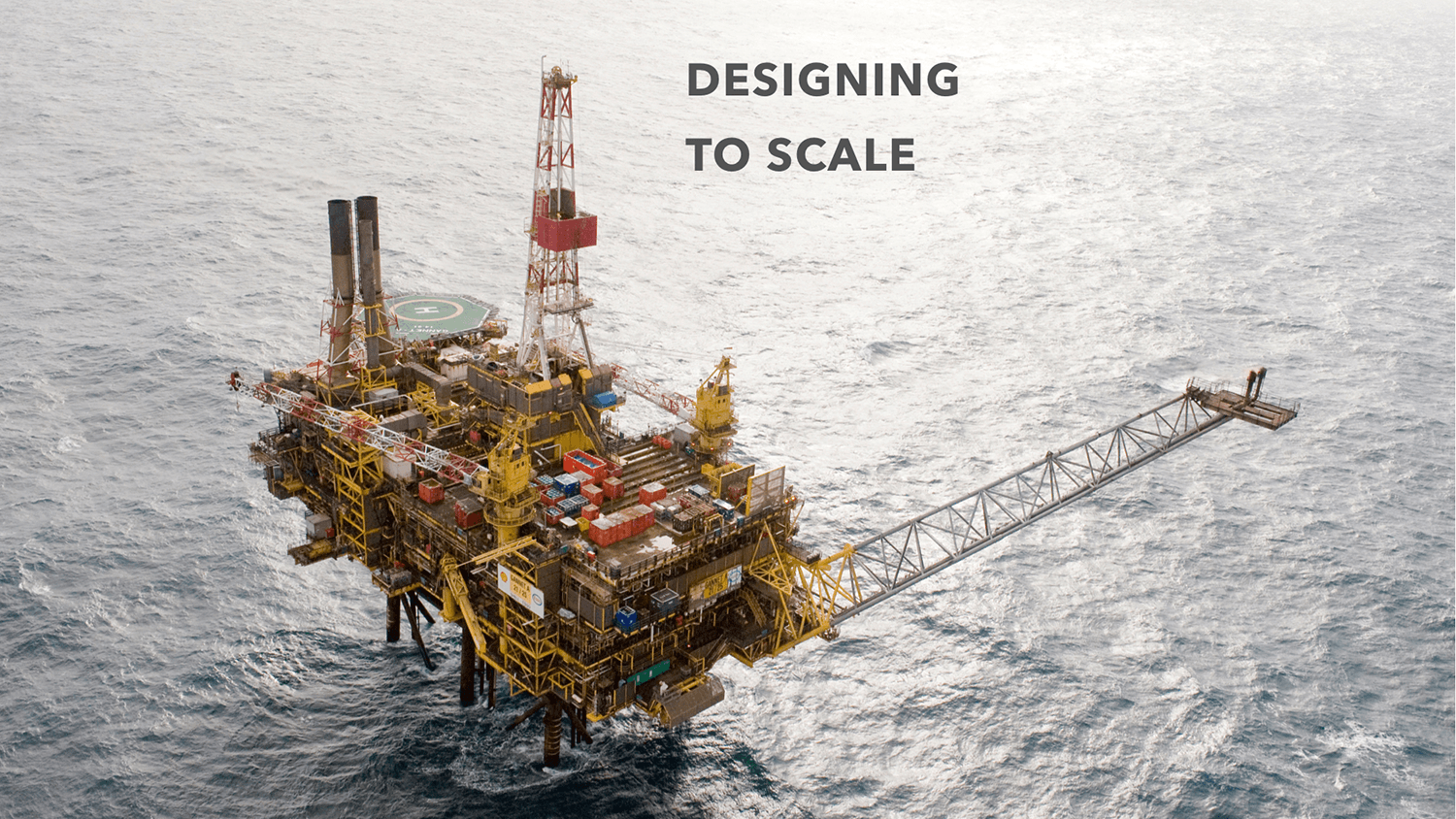
Designing for a global organisation
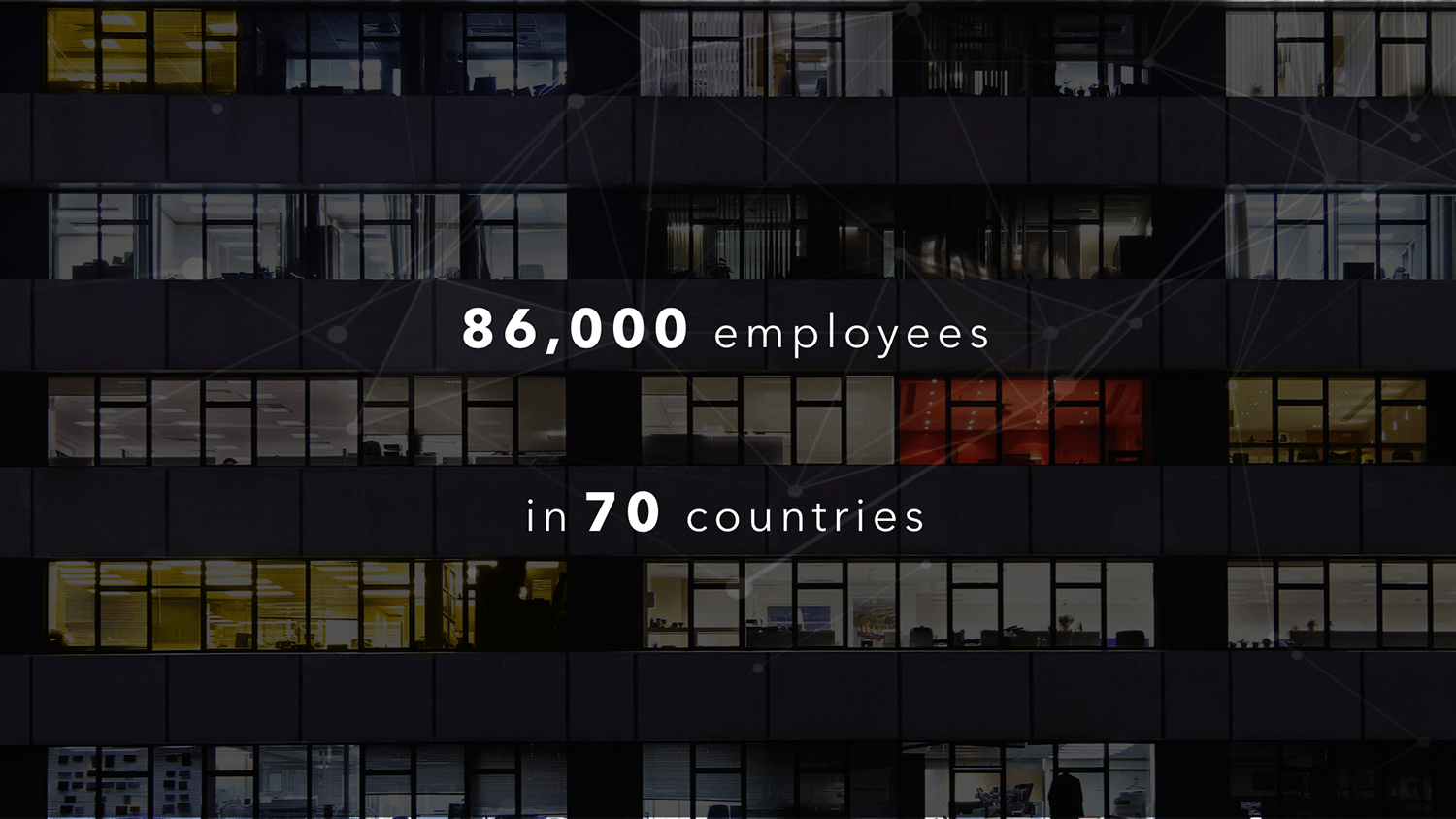
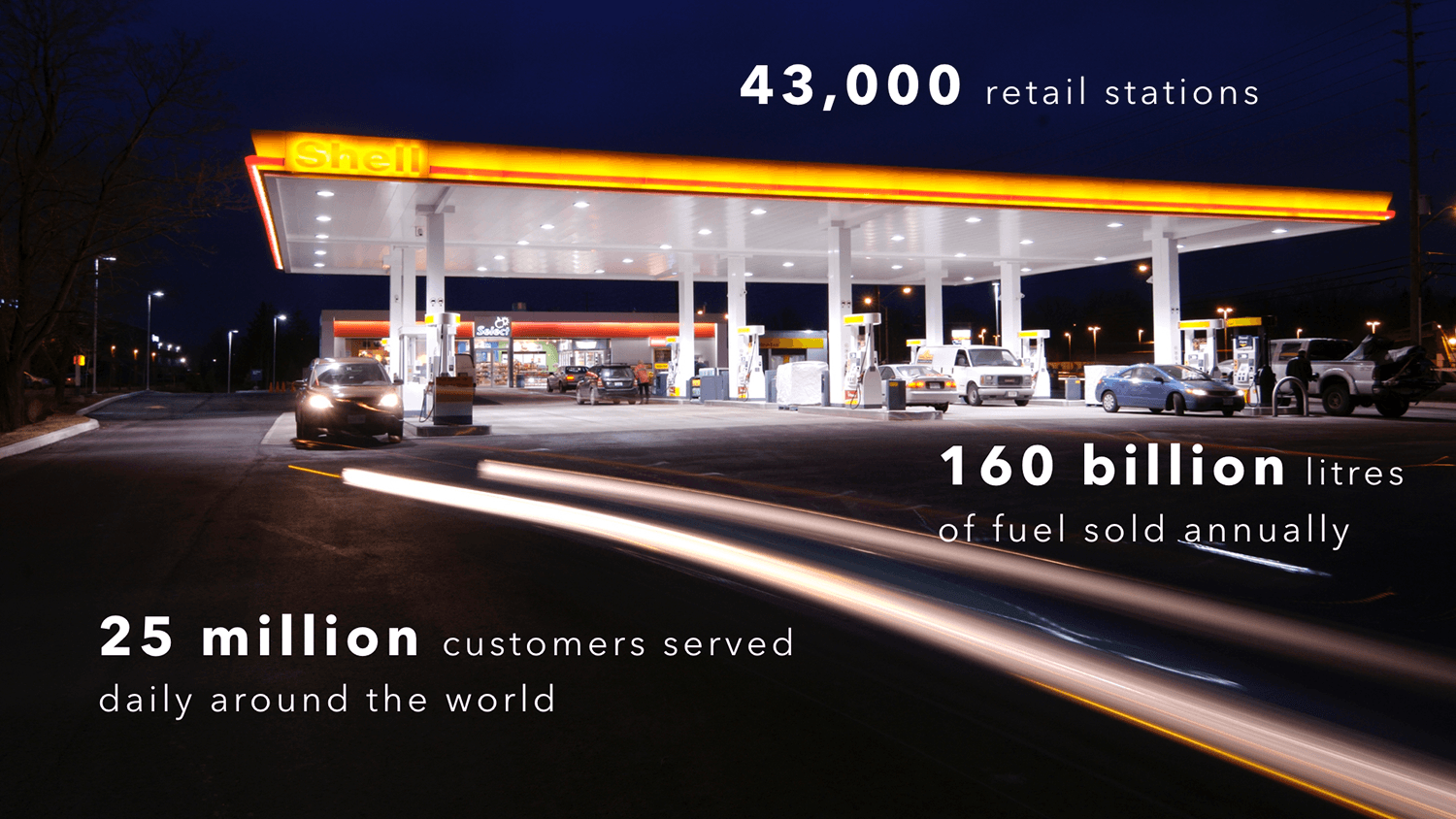
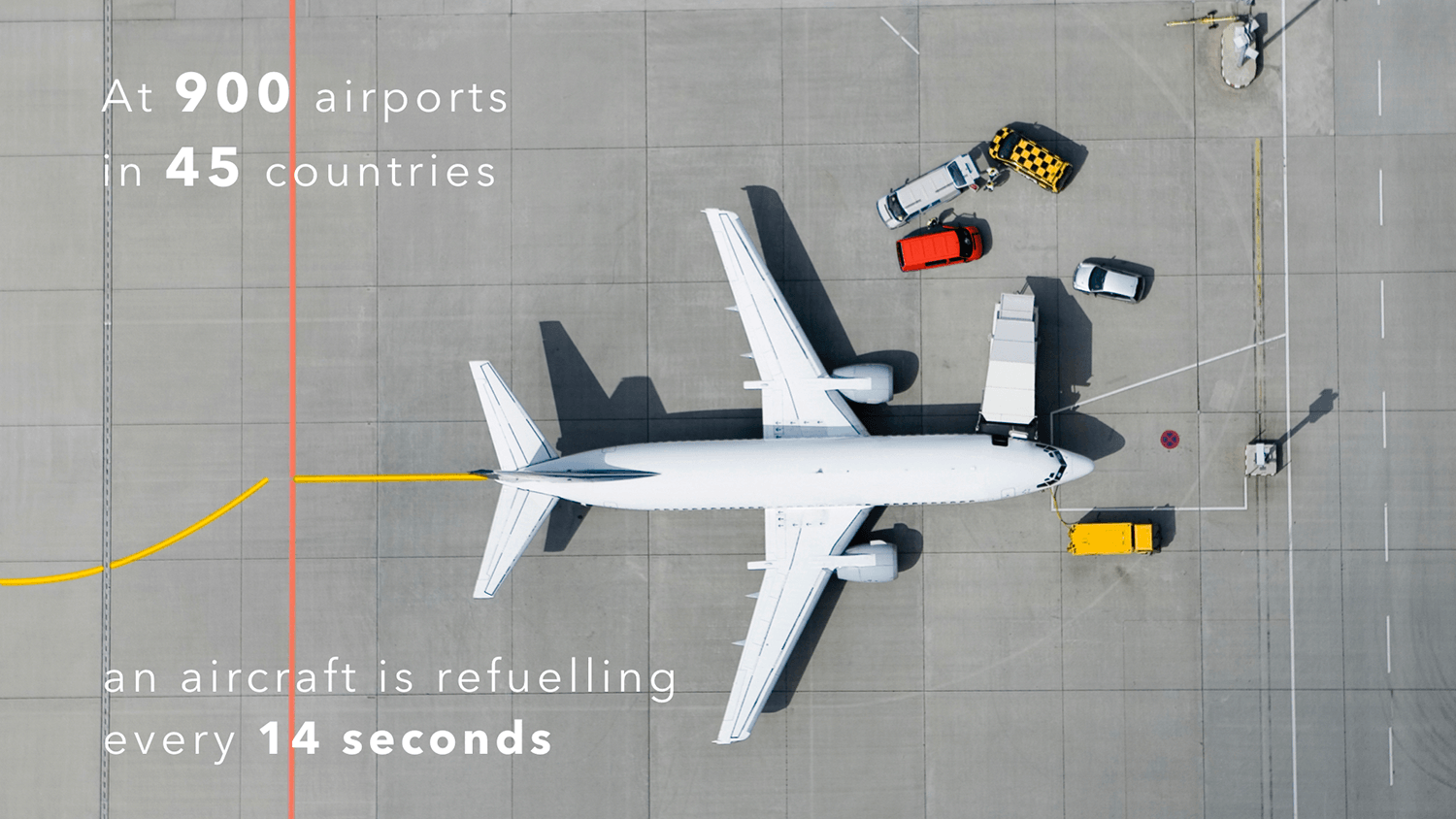
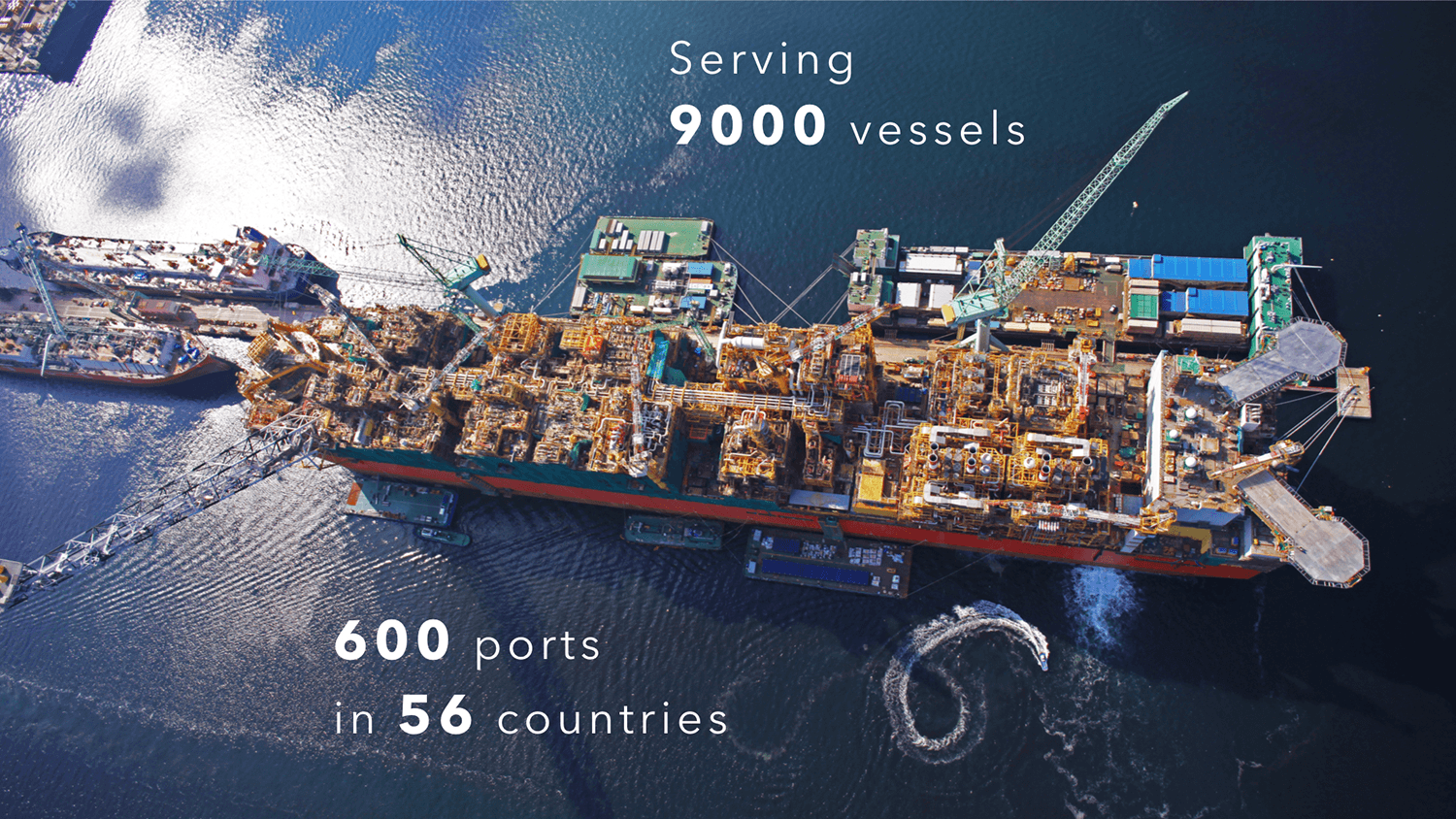
I worked with innovative internal teams across many lines of business and regions and external consultancies to distill best practices and our collective knowledge into a unified approach to product development.
We found core principles, product development stages and outcomes, that are relevant for any product or service, and many methods and activities, that teams can choose from to achieve those outcomes.
There are also sets of activities relevant to specific product types, for example, for research and development or advanced analytics or internet of things. We decided to develop the core approach and layers specific to product type and scope.
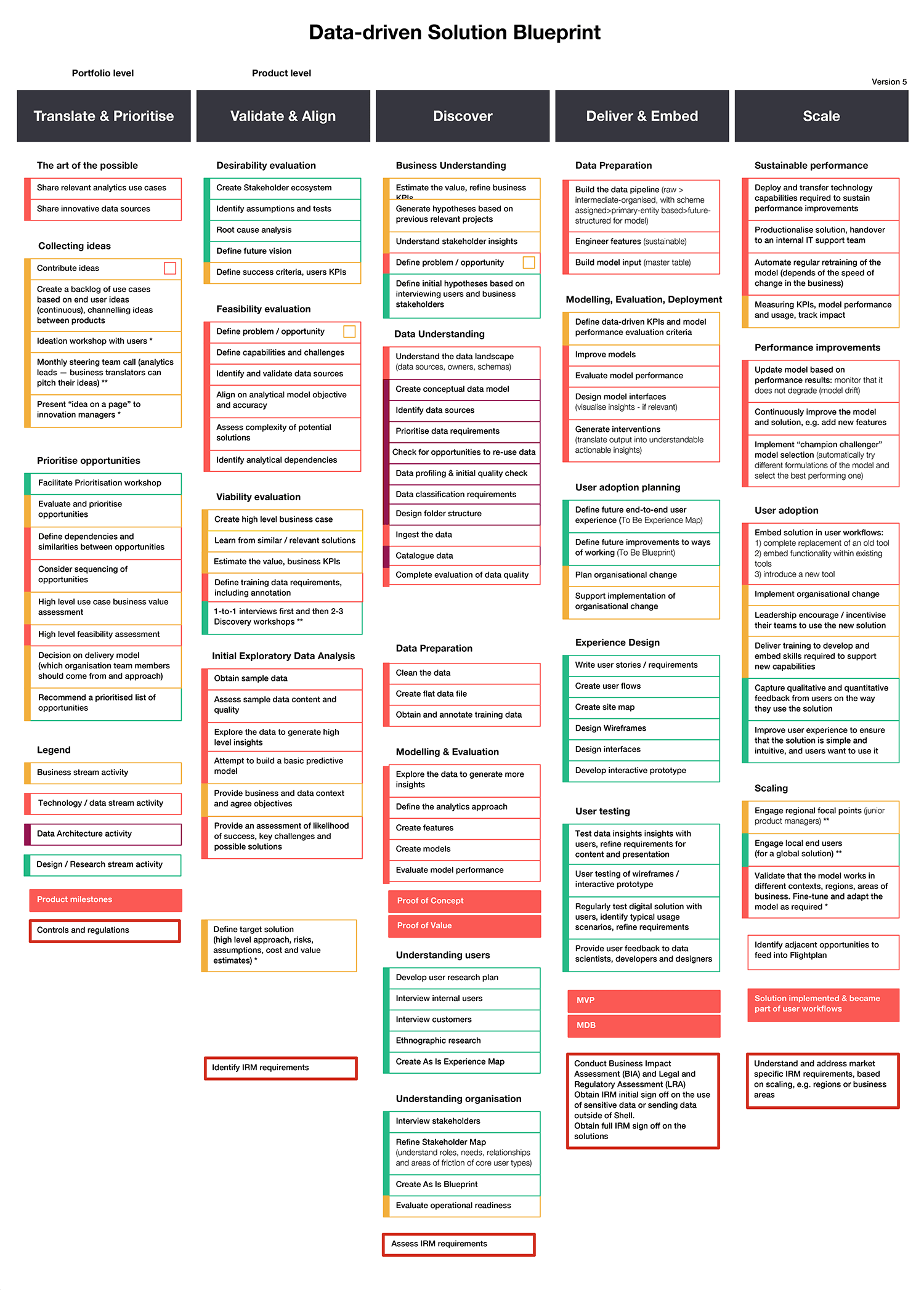
High level Data-driven solution Blueprint
Data-driven Design Methodology
We started small — we were asked to codify learnings of an advanced analytics programme of work, aiming to find the best ways to use data science to optimise end-to-end sales process, so that other teams, working on data-driven projects at Shell, could benefit from our experience.
I worked with multiple internal and external data science teams to understand and align their ways of working.
I created a Data-driven Solution Blueprint, showing product development stages, their core outcomes, typical activities and deliverables, and effective ways of collaboration between business stakeholders, designers and data scientists; documented typical challenges and solutions.
This work fed into a larger programme: laying foundations for a data driven culture, which included data strategy, redefining IT and business roles to include data competency and a training programme for C-level, management and practitioners.
I developed training materials about data-driven solution design and development for this programme.
Designing data-driven products in a large organisation has a potential to make a noticeable impact on profit, cost saving and process efficiency, when making even minor improvements. At the same time the ecosystem of services a large global organisation provides is so complex, that it is often challenging to attribute a financial outcome to a particular project or feature.
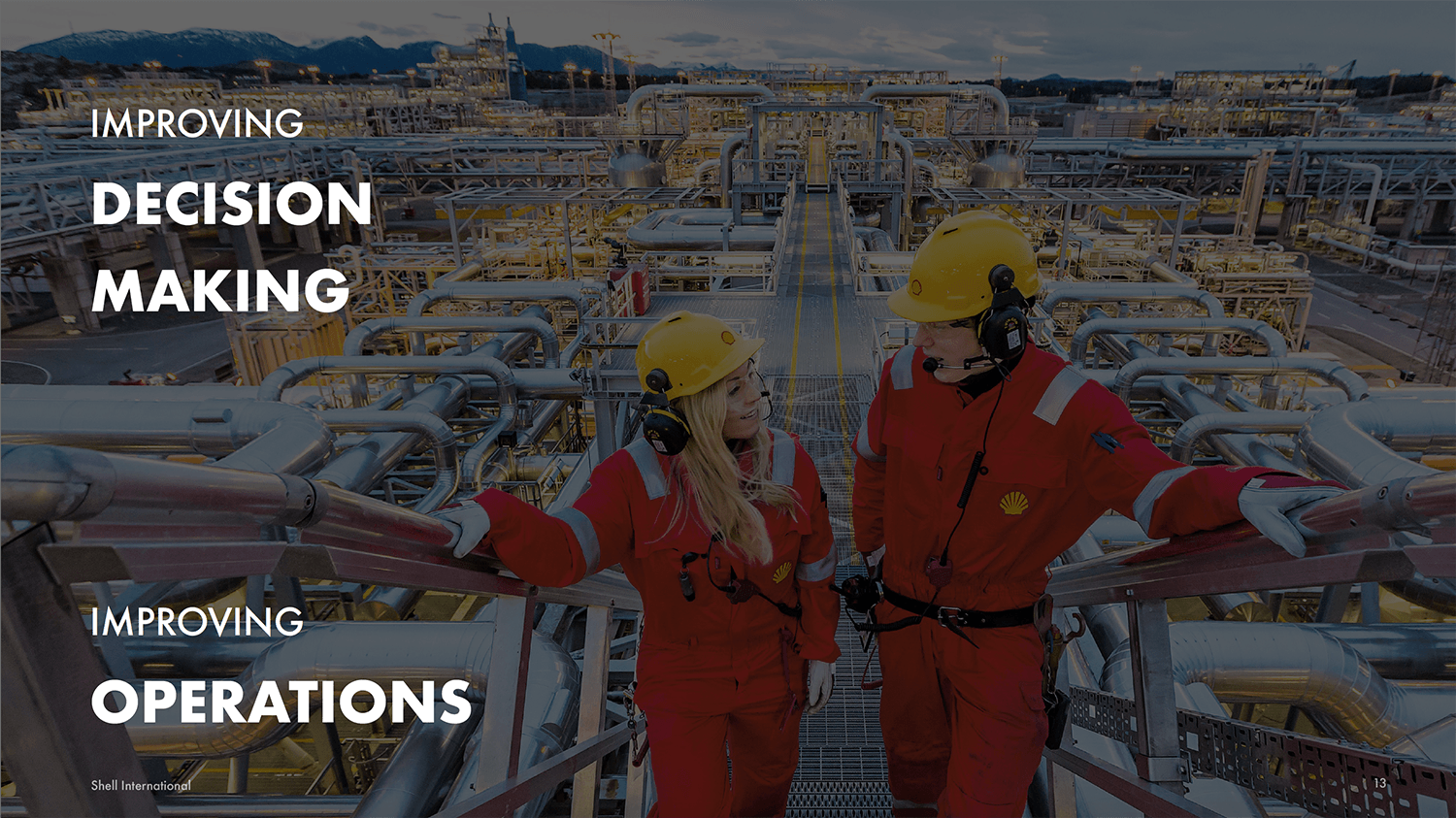
The areas where data driven solutions have the biggest impact were improving decision making and improving operations.
Improving decision making: data analytics can provide actionable insights to the right people within organisation at the right time in the way most appropriate for their work context, that enable them make informed decisions. Some simpler actions can be automated using advanced analytics, freeing up time for people to focus on making more complex and strategic decisions.
Improving operations: advanced analytics can help optimising the way complex systems work by utilising vast amounts of data (people, processes, financial, physical states, location etc.), for example, optimising maritime fleet routes of thousands or ships around the world or predicting when factory machinery might need maintenance based on sensor data, or predicting sales volume based on time of year, weather patterns, political or economic factors.
Product Delivery Methodology
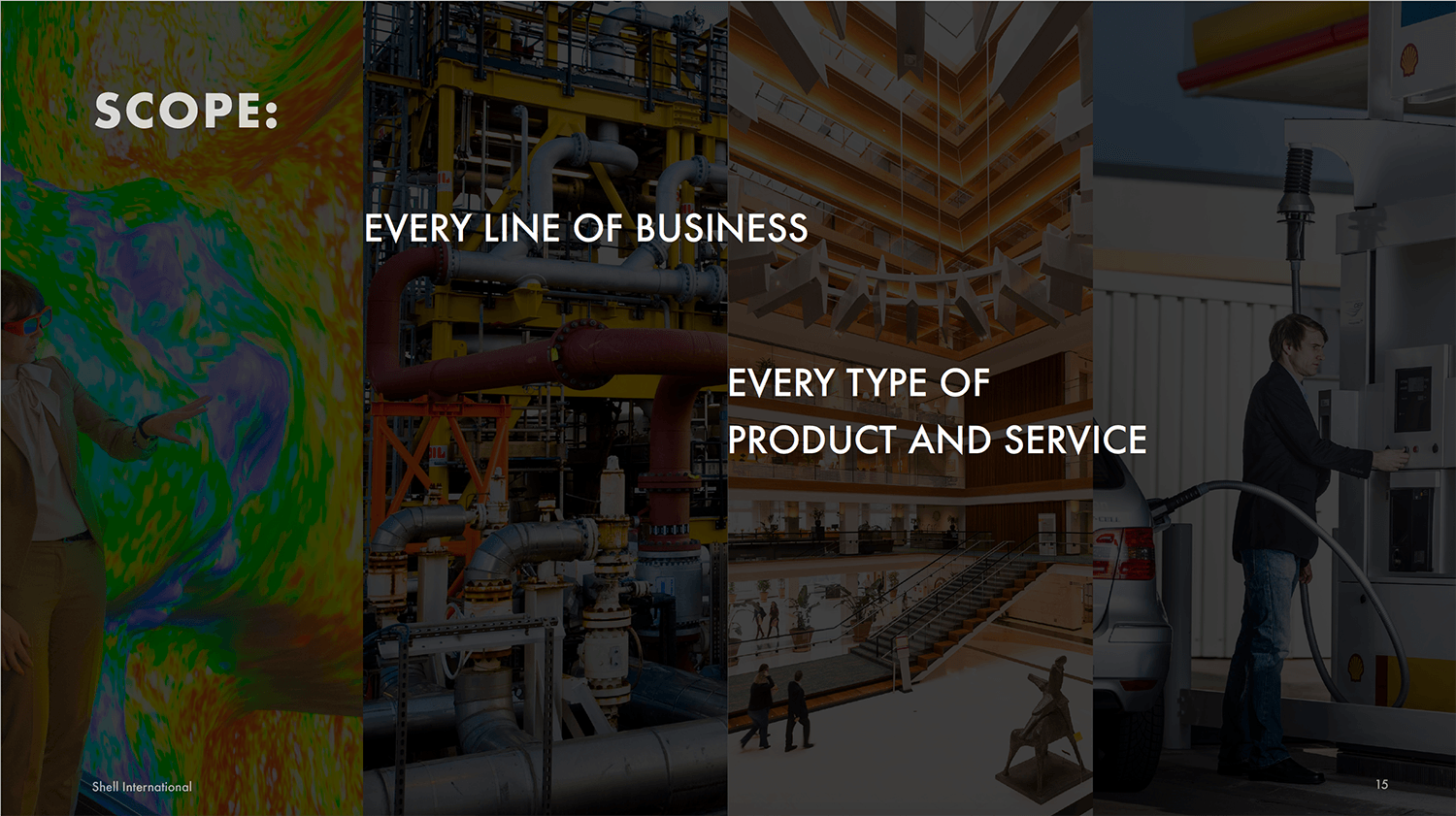
At the next stage the scope of our work expanded from Data-driven Solutions Methodology for Global Commercial to Product Delivery Methodology for every type of product and service at Shell (the Playbook).
Principles
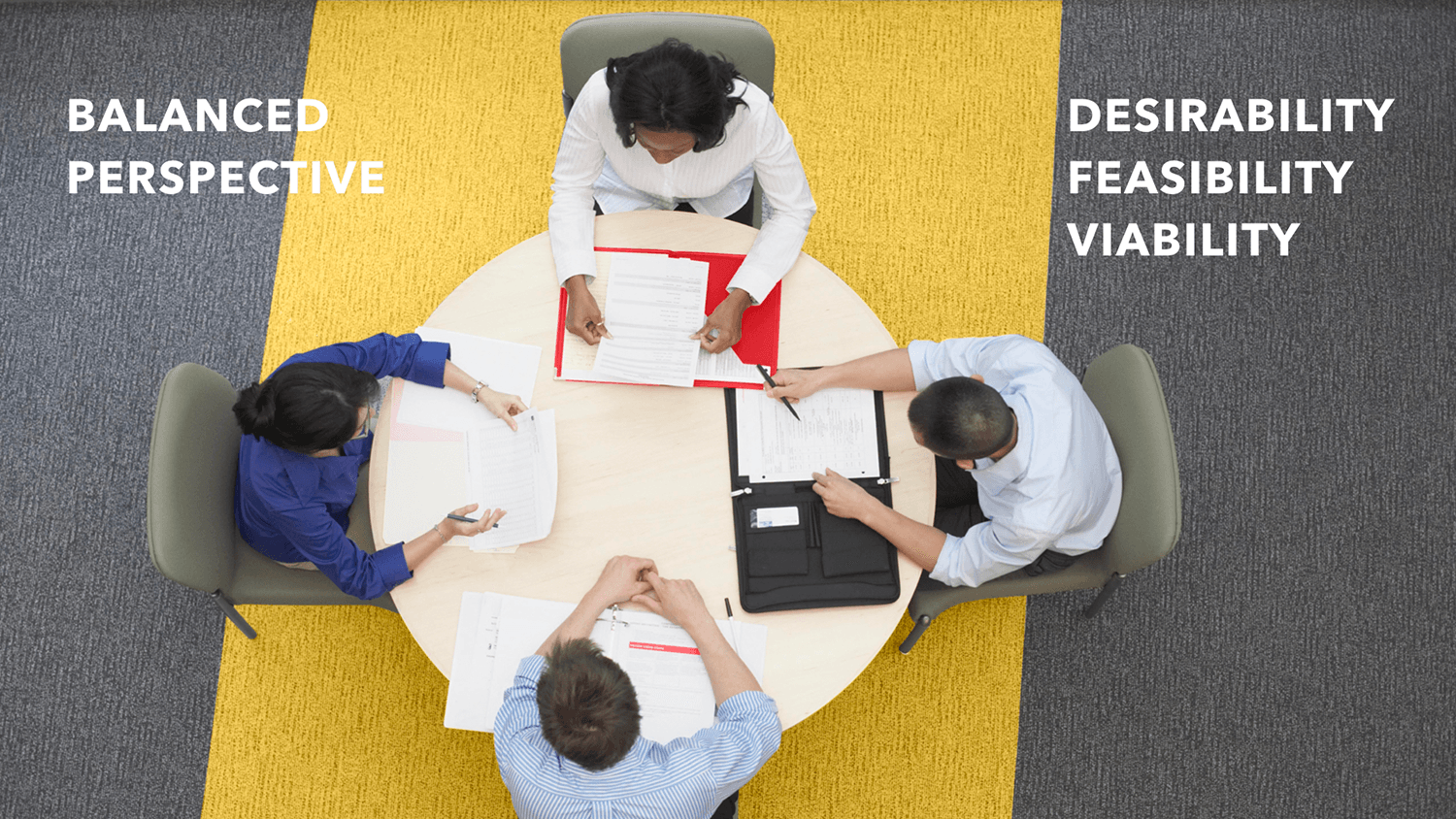
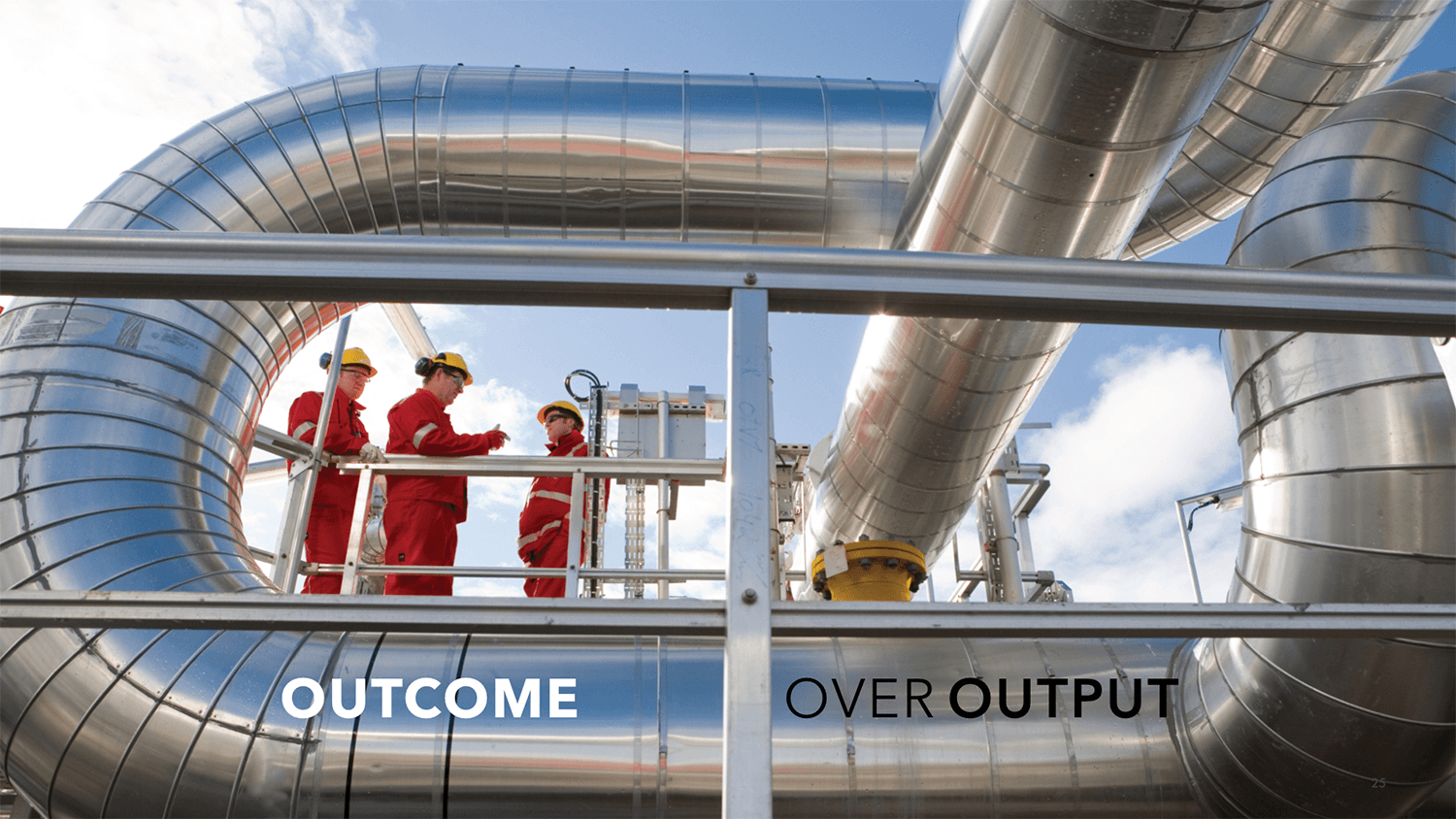
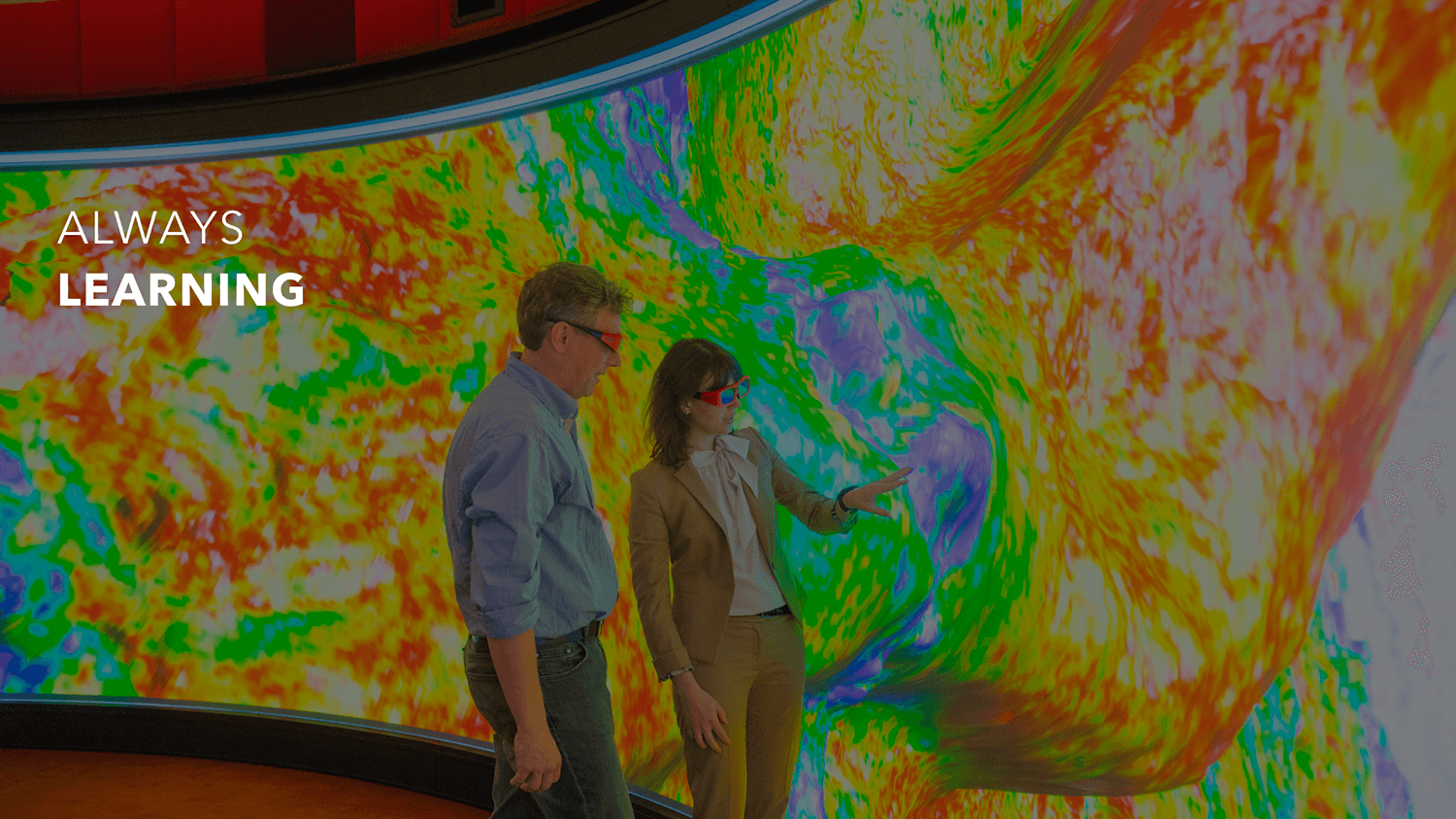
As we discussed best practices of product development with many internal teams, the core principles started to emerge, which helped us define product development process, approach to shaping teams, ways of working, culture and mindset.

Shaping product teams
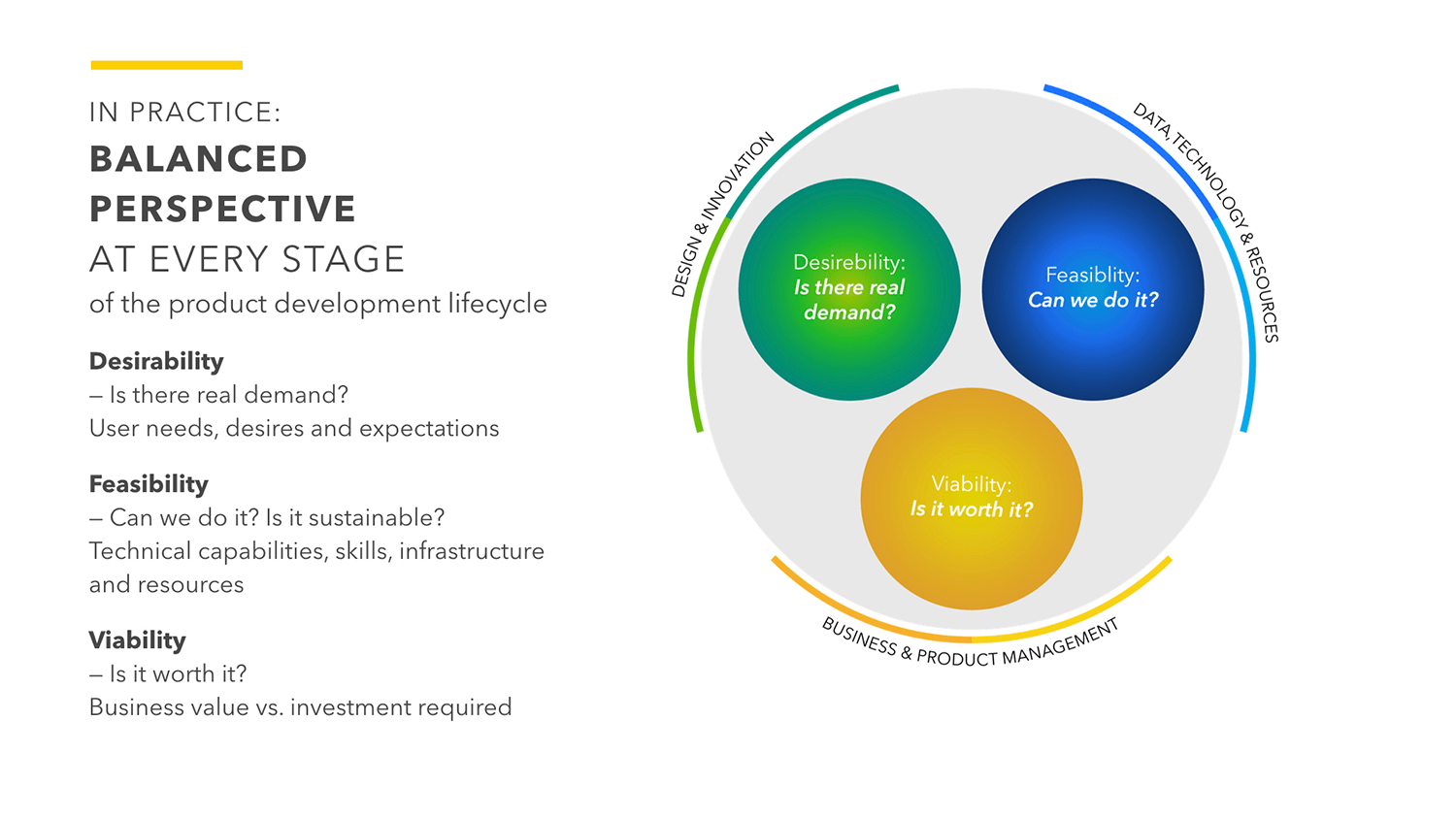
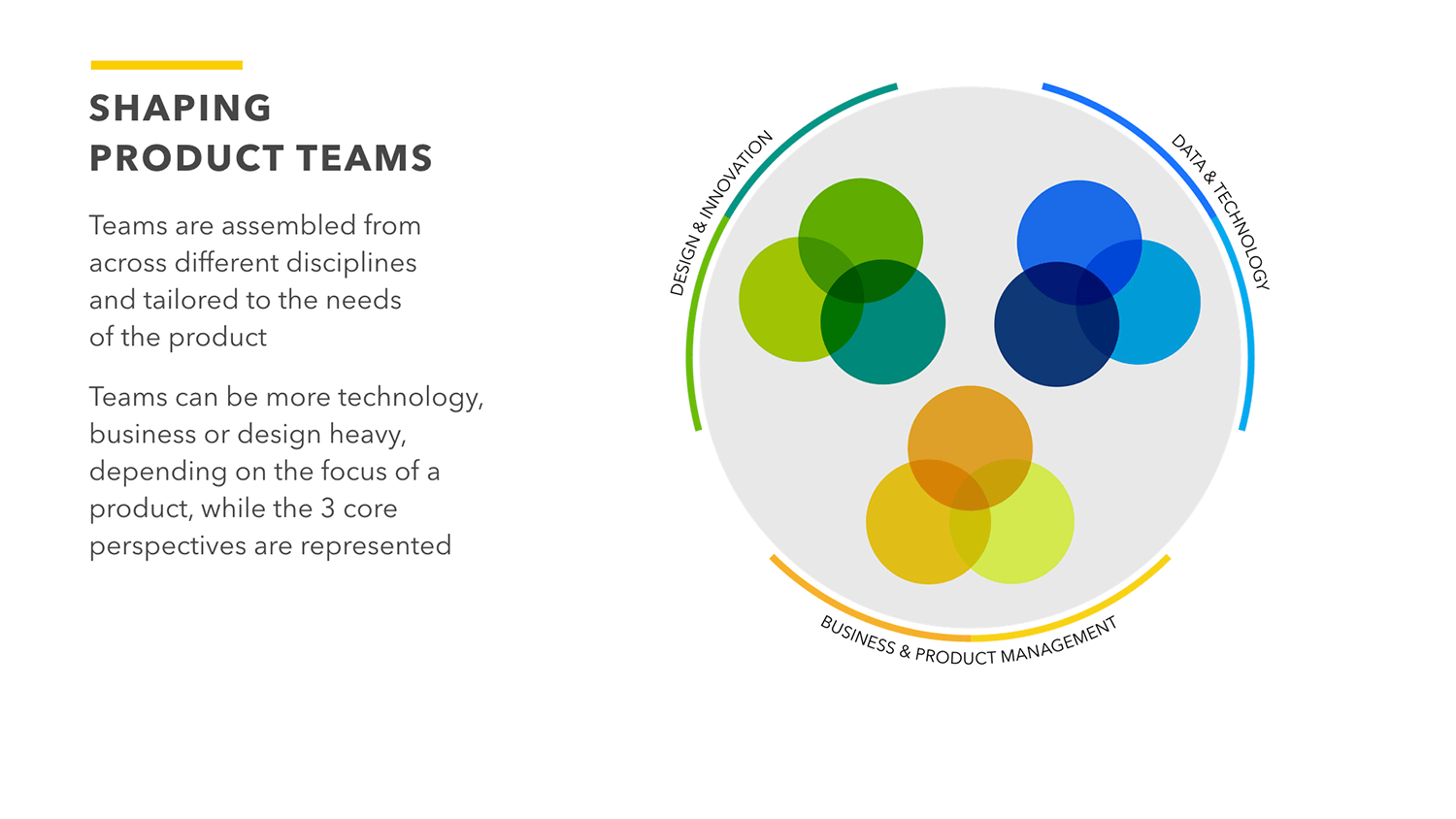
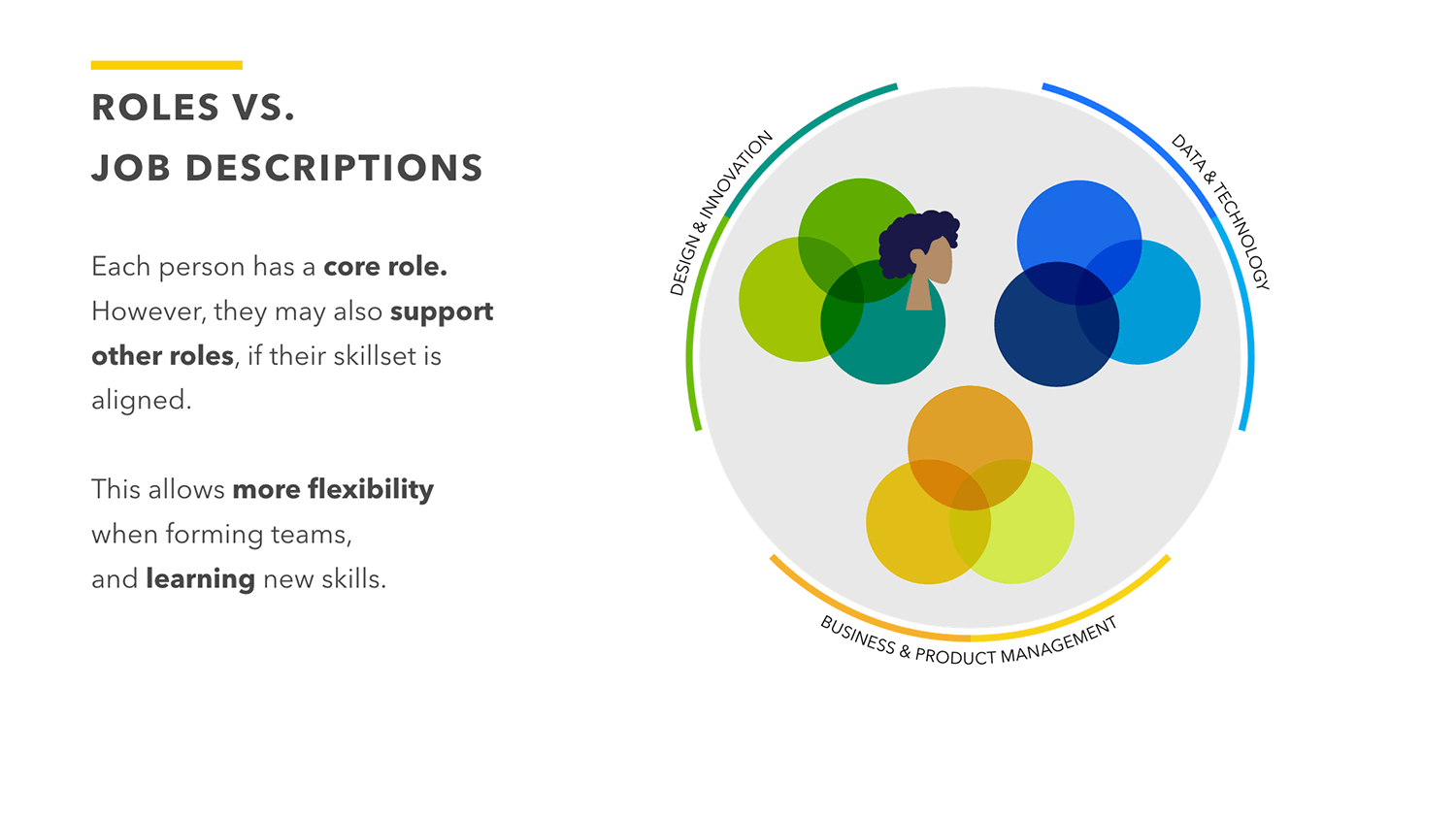
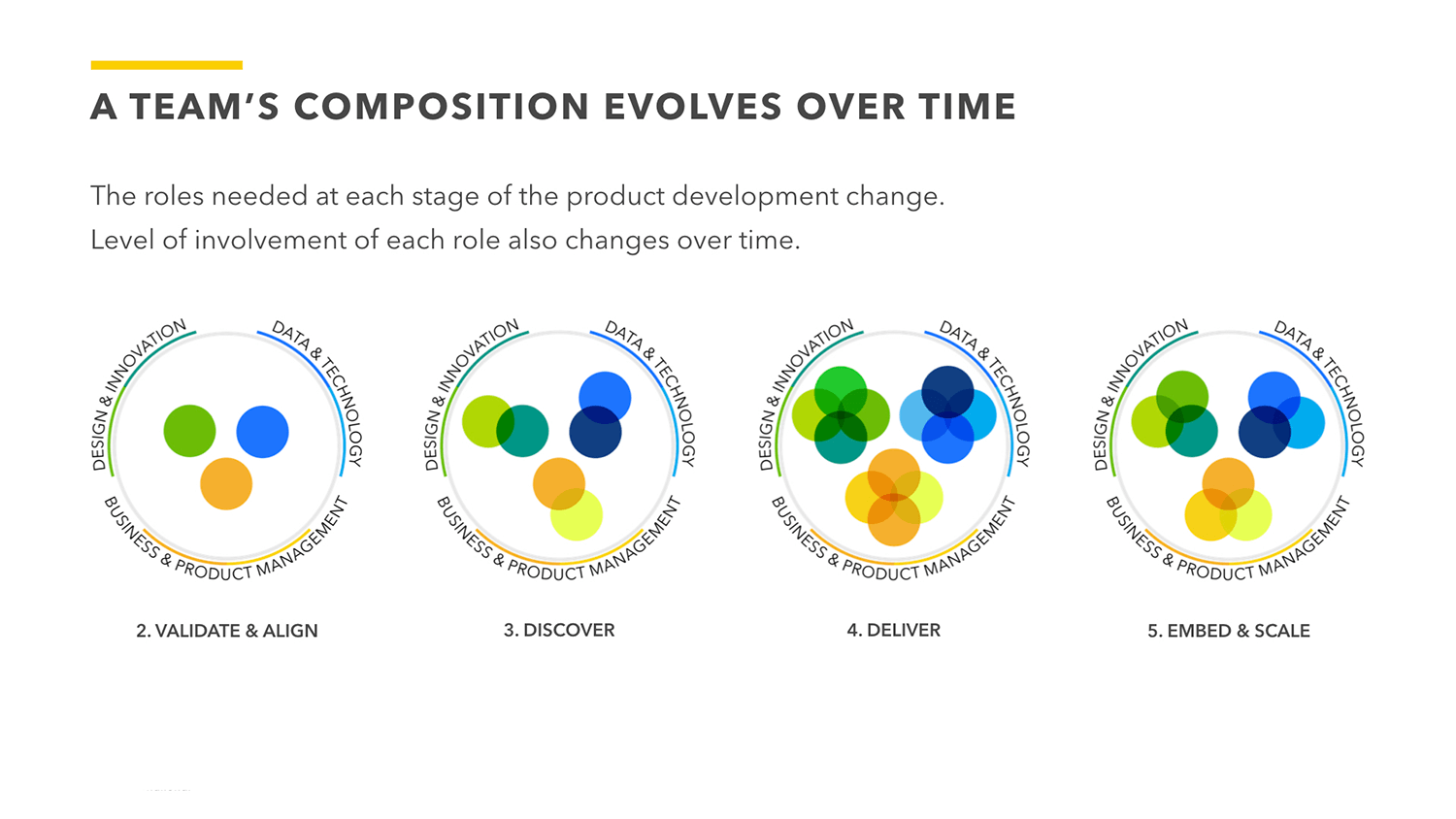
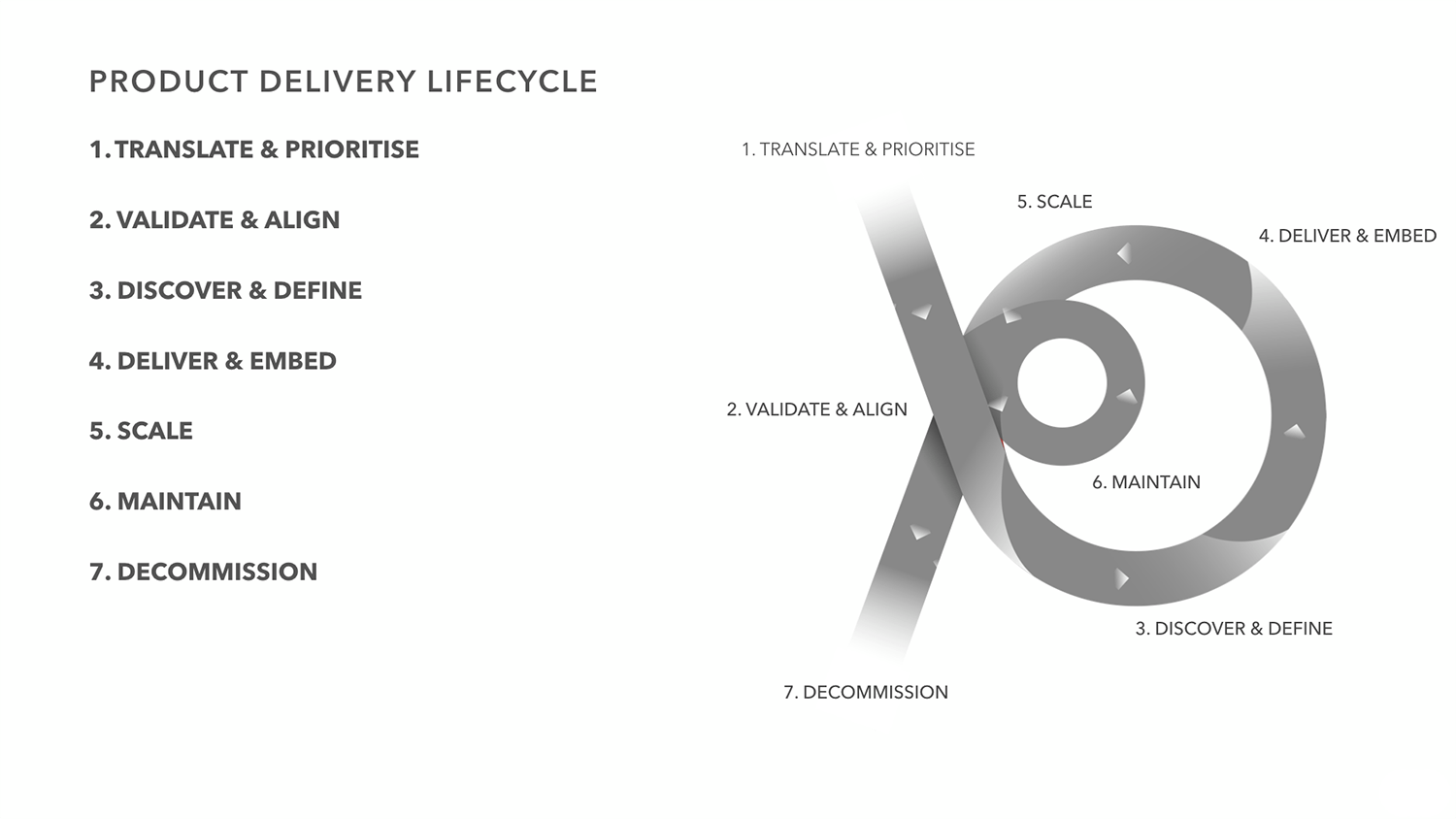
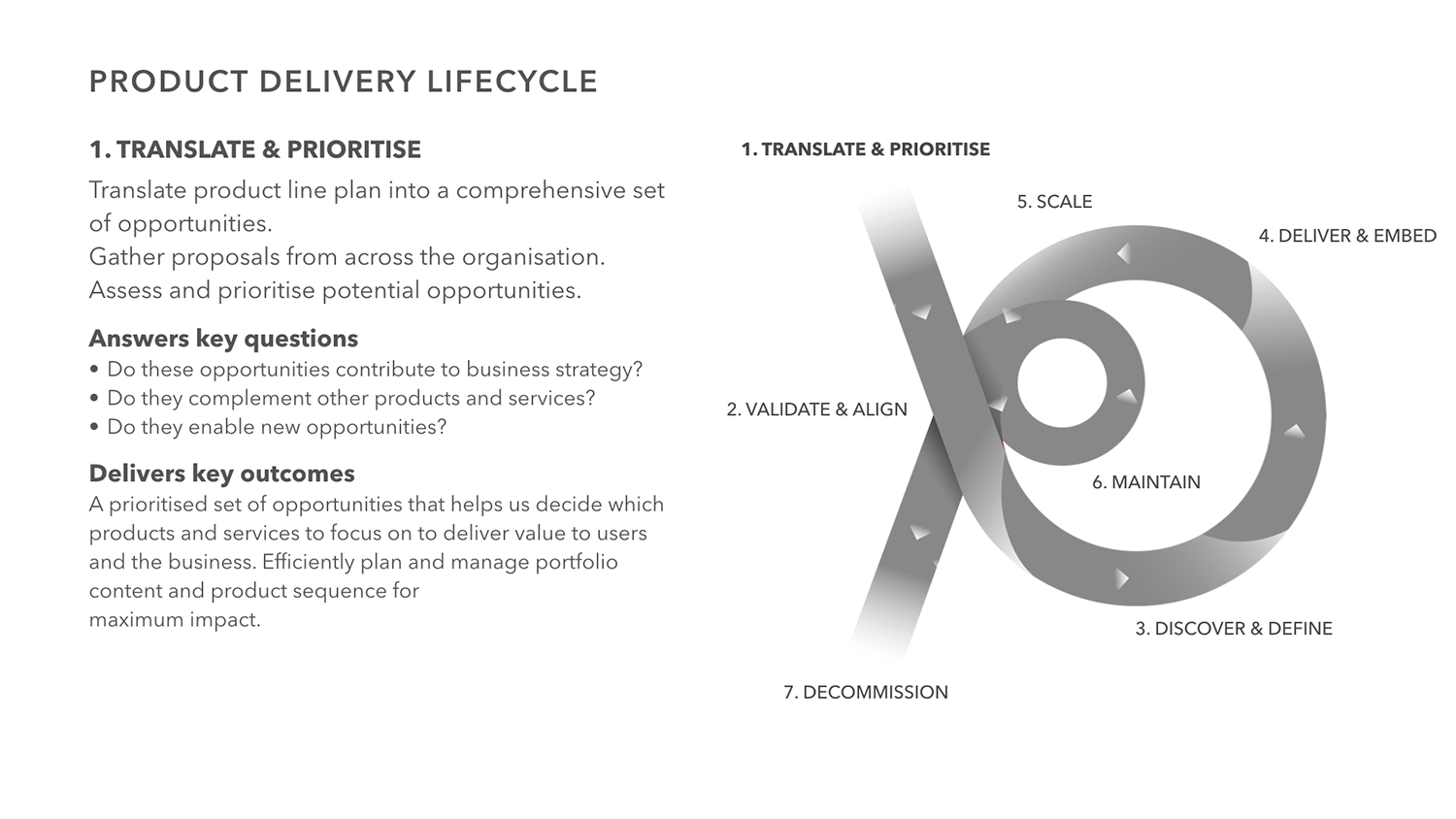
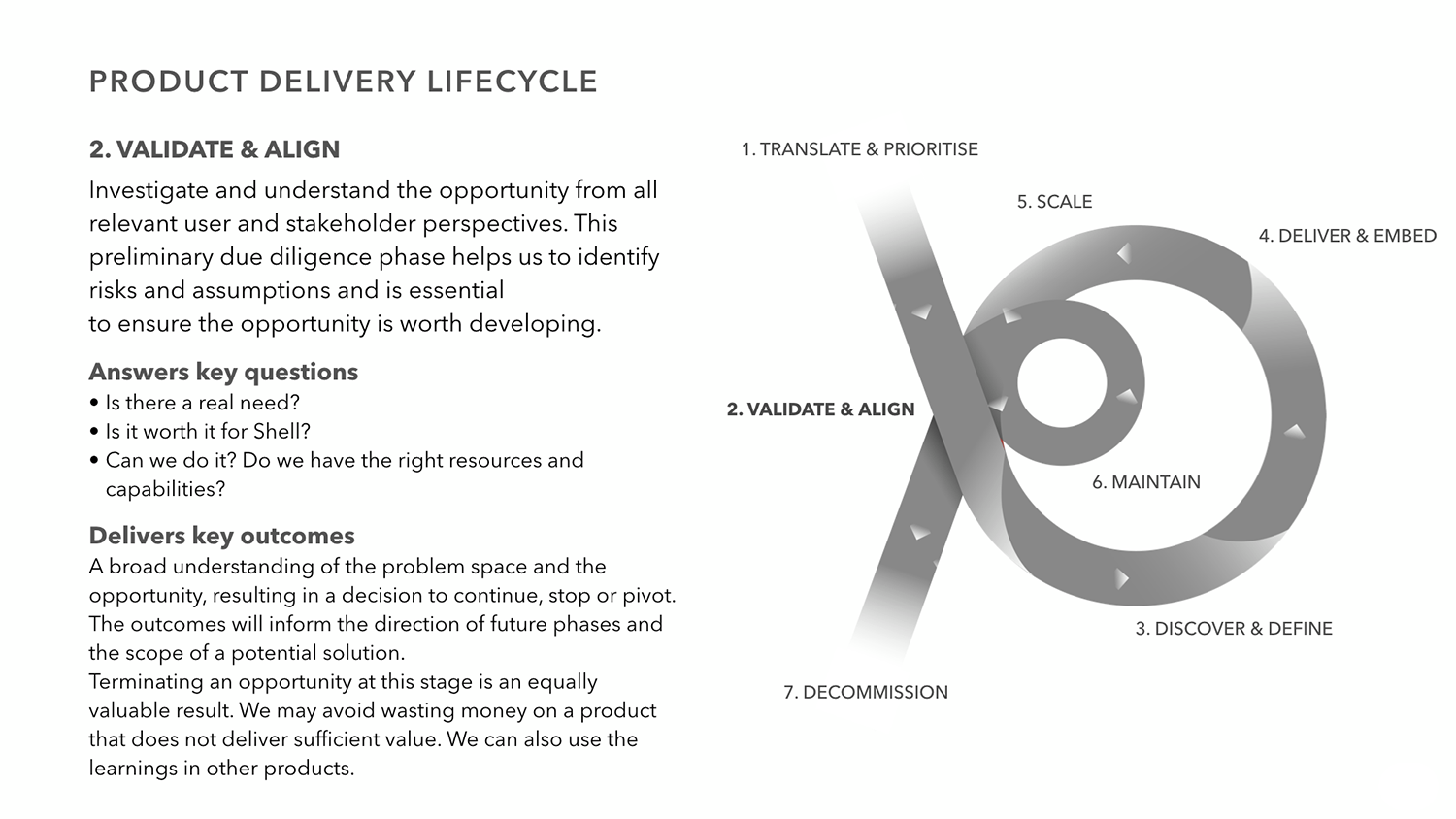
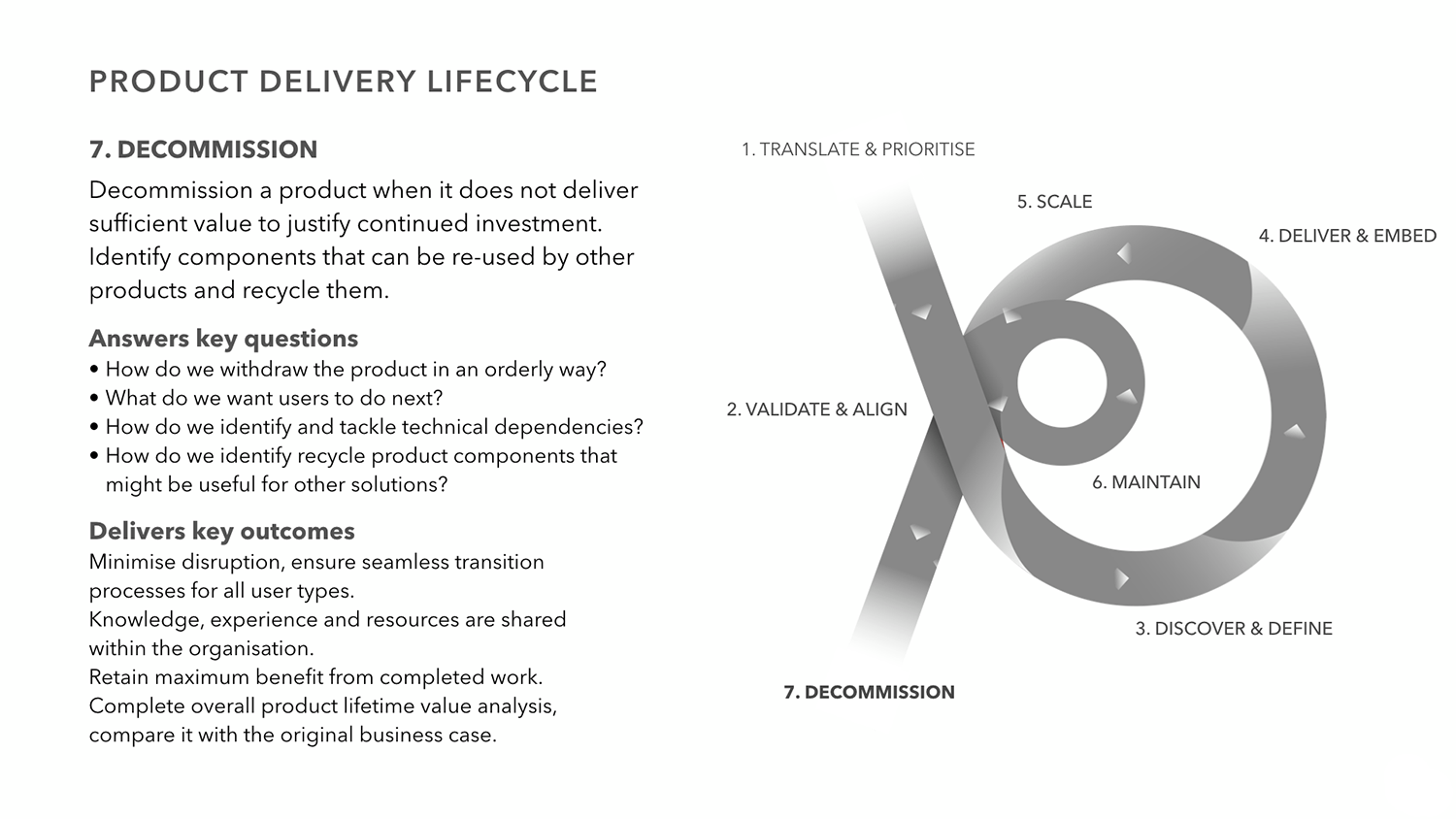
Product Delivery Lifecycle
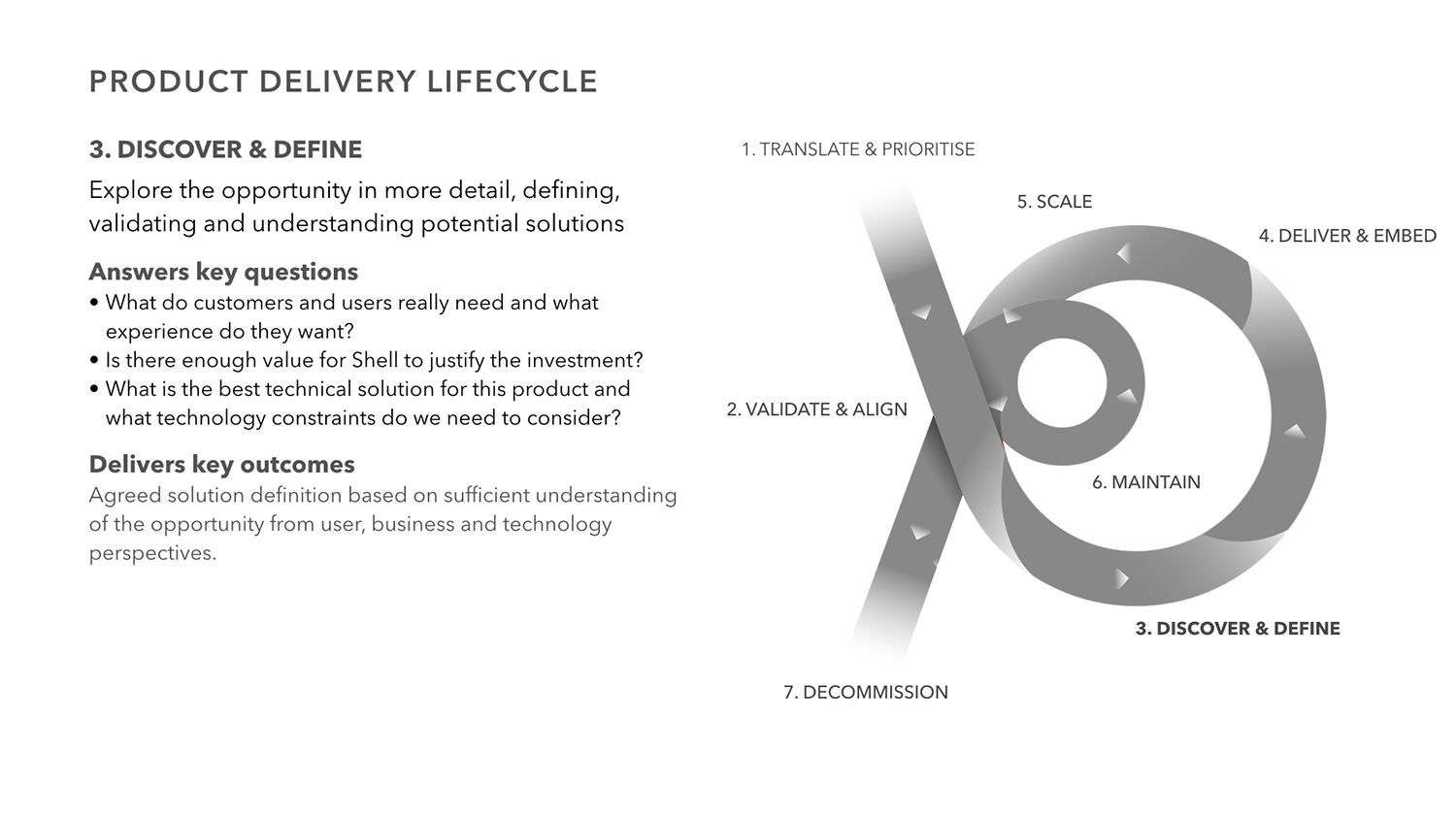
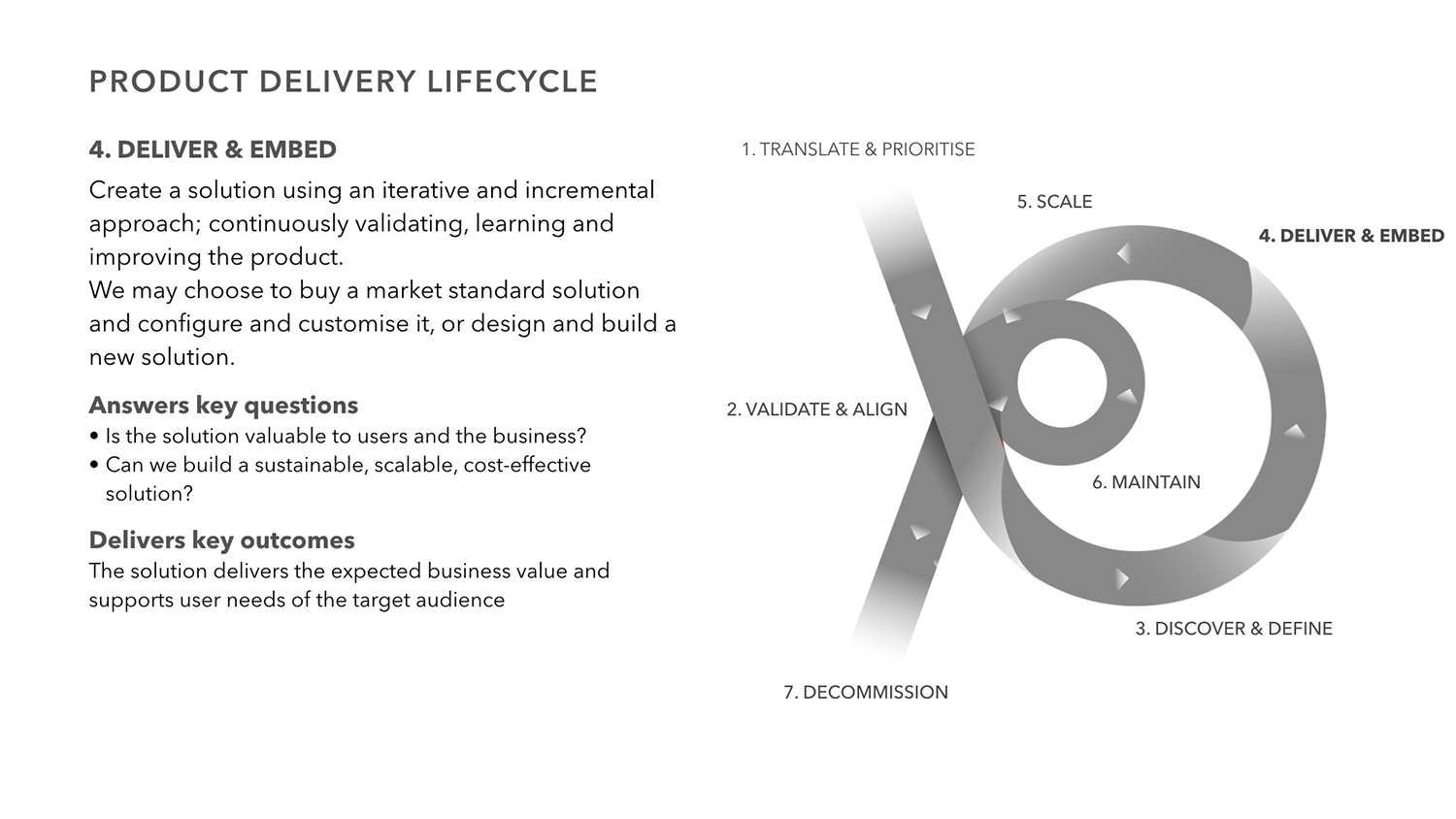
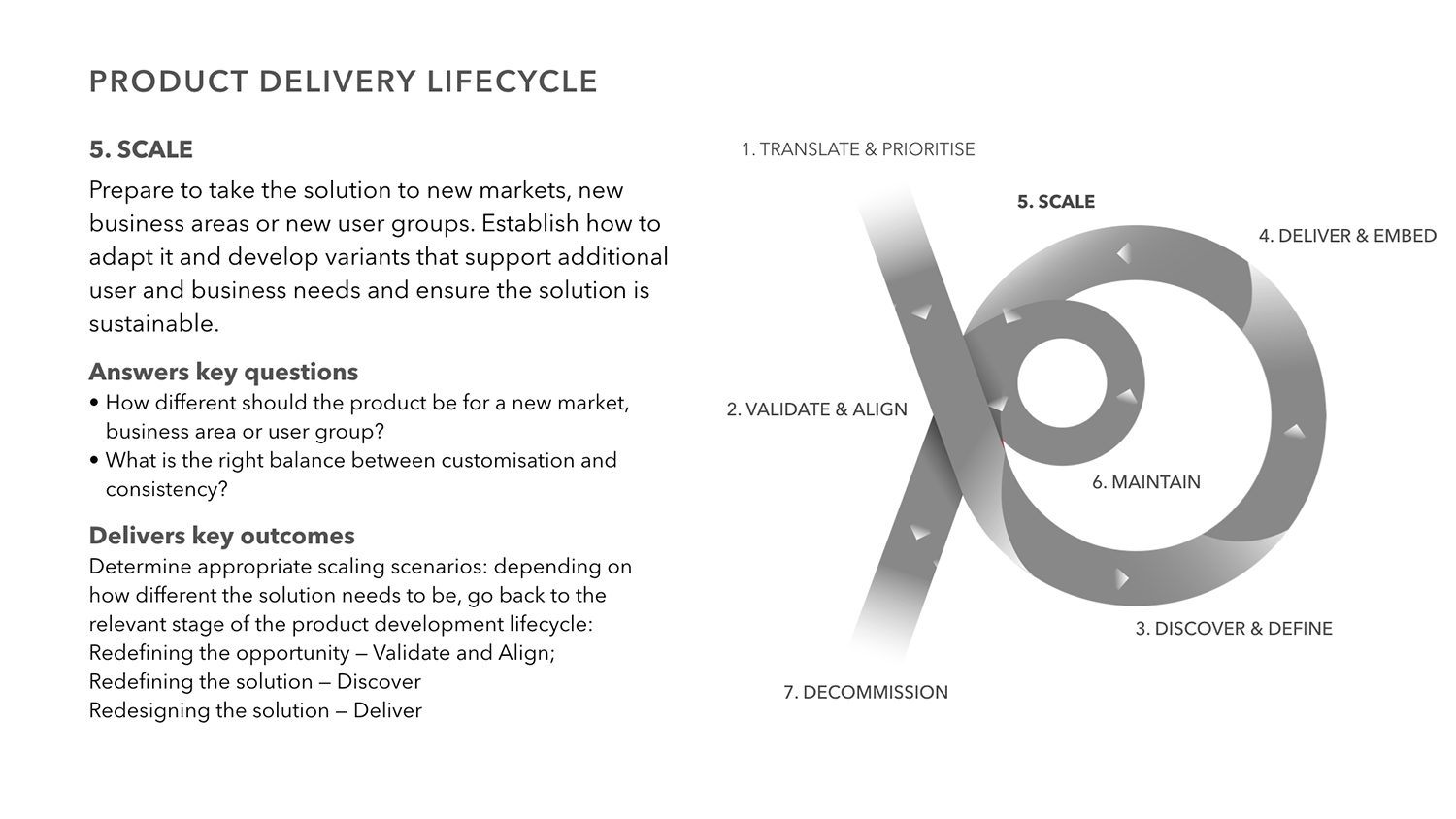
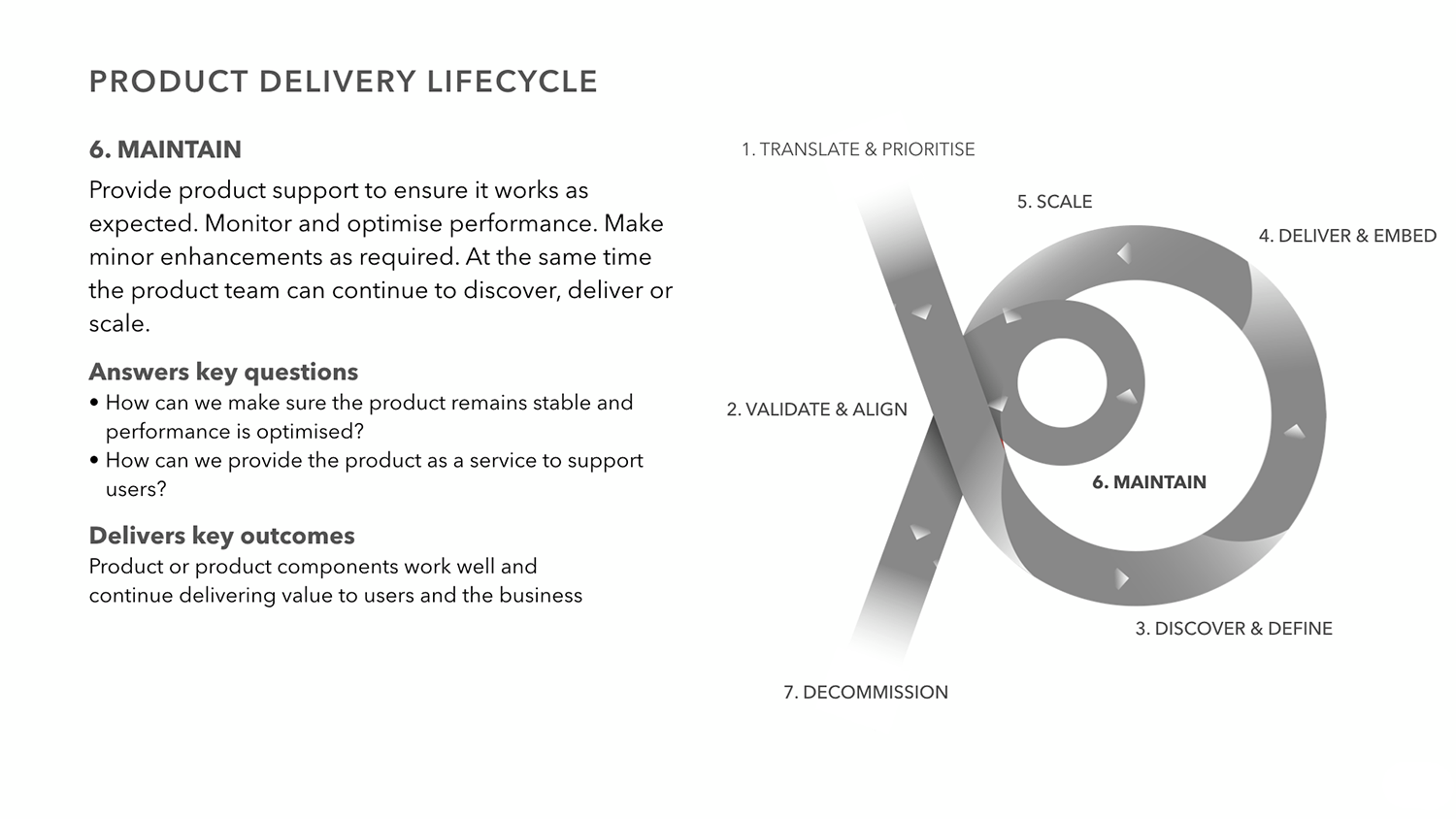
We identified 7 core stages of a full product development lifecycle from ideation to decommission. Below is the essence of each stage: the definition, the core questions that the teams aim to answer and the key outcomes they aim to achieve.
Design strategy layers
While our main focus was on defining best practices for product design, it is important to consider products and services in context of the product portfolio they belong to and value stream they are part of and also business strategy they align with.
This perspective helps to ensure that products developed by independent teams contribute to realising the wider business strategy more effectively, and use shared infrastructure, resources and knowledge.

Outcomes
Our team delivered a Minimal Viable Product version of Product Delivery Methodology for Shell.
We actively engaged with product teams in many lines of business to trial the new ways of working on the products and services they were developing. We tested different ways of introducing product delivery best practices, design thinking, advanced analytics and engaging with supporting partners (infrastructure, legal and technical architecture).
As a result we received feedback on the content, level of detail and presentation of the methodology and refined it to better support their needs, and also tested new ideas for content development to inform our Roadmap.
The Product Delivery Playbook is a live and constantly evolving product and service and it will continue growing and improving to best support the needs of product teams and the business.